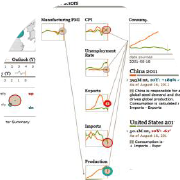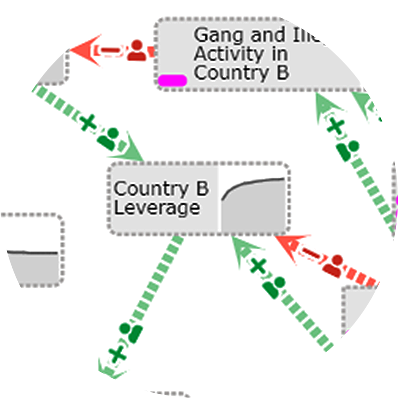
The construction of computational causal models for complex systems has typically been completed manually by domain experts and is a time-consuming, cumbersome process. We introduce Causeworks, an application in which operators “sketch” complex systems, leverage AI tools and expert knowledge to transform the sketches into computational causal models, and then apply analytics to understand how to influence the system.

2022
2021
-
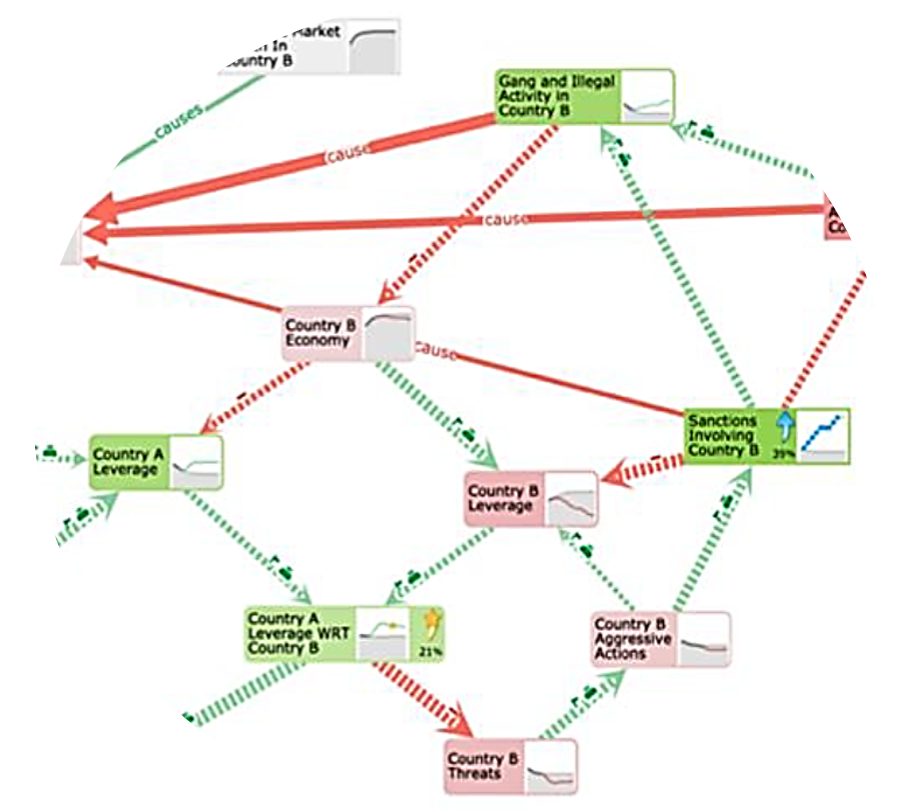
Modeling complex systems is a time-consuming, difficult and fragmented task, often requiring the analyst to work with disparate data, a variety of models, and expert knowledge across a diverse set of domains. Applying a user-centered design process, we developed a mixed-initiative visual analytics approach, a subset of the Causemos platform, that allows analysts to rapidly assemble qualitative causal models of complex socio-natural systems.
-
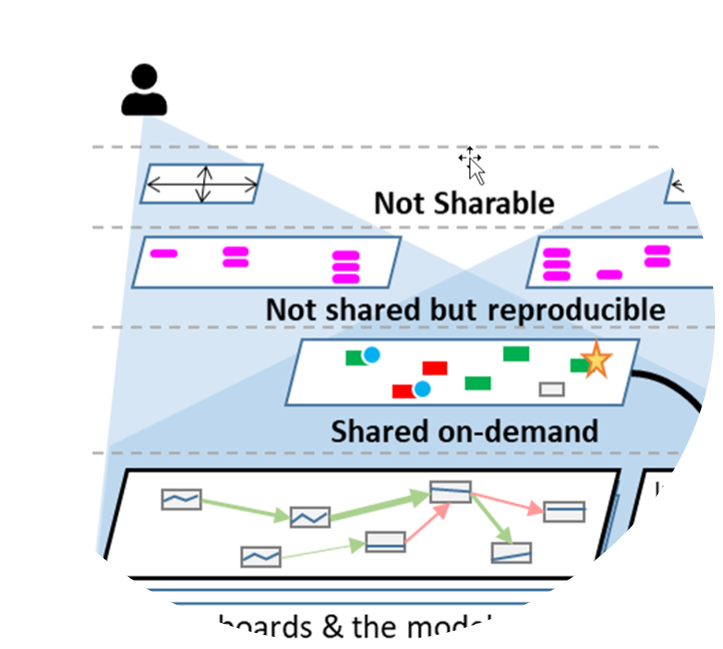
Military planners use “Operational Design” (OD) to understand systems and relationships in complex operational environments. Causeworks is a visual analytics application for OD teams to collaboratively build causal models of environments to understand and find solutions to affect them. Collaborative causal modeling can help teams craft better plans, but there are unique challenges in developing synchronous collaboration tools for building and using causal models. Causeworks overlays analytics inputs and outputs over a shared causal model to flexibly support multiple modeling tasks simultaneously in a collaborative environment with minimal state management burden on users.
-
Causal Model building for complex problems has typically been completed manually by domain experts and is currently a time-consuming, cumbersome process. The resulting models are simple diagrams produced on whiteboards, and do not support computational analytics, thus limiting usefulness. Causeworks helps operators “sketch” complex systems, and transforms sketches into computational causal models using automatic and semi-automatic causal model construction from knowledge extracted from unstructured and structured documents. Causeworks integrates computational analytics to assist users in understanding and influencing the system.

2020
-
Visualization has recently gained a foothold in the field of artificial intelligence research. Typically, this work has focused on visualizing modules or specific dynamics of machine learning models, doing so for the purposes of model explainability or for visual debugging. Drawing from ongoing projects involving pandemic analysis and famine shocks, this seminar describes research efforts on graphical modeling where visualization functions as the medium for modeling itself.

2018
-
Causality is important for providing explanations when using computational models to understand complex systems structure and behavior, and what happens when change occurs in the system. There are many properties of causality that need to be considered and made visible, but current causality visualization methods are limited in expressions, scale, dimensionality and do not provide sufficient support for user tasks such as “what-if” and “how-to” questions, or in supporting groups considering multiple scenarios.